A UX portfolio is not a gallery of screens. Instead, it shows how you think and decide. This guide explains how to build a UX design portfolio that recruiters and clients actually want to read, even if you only have a few projects so far.
Show fewer projects, but go deeper. Choose projects where you made real design decisions. A school project or a redesign of an existing app is fine, as long as you can explain why you did what you did.
Start with the problem, then your role, your process, the solution and the result. Because the structure is fixed, your work becomes easy to scan. A reviewer often spends less than a minute per case.
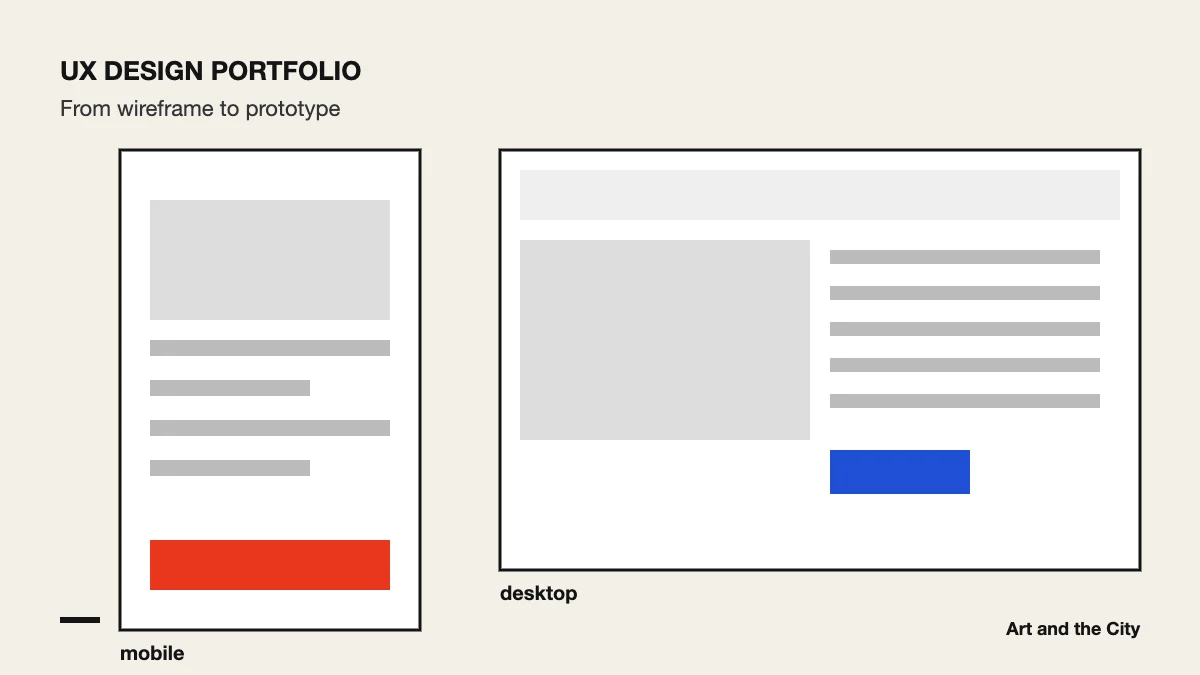
Include research notes, user flows, sketches, wireframes and the final prototype. Together, these show how you got from the question to the answer.
Write why you chose one solution over another. Short explanations are worth more than long descriptions of the tool you used. For example, “we moved the price to step one because five of six testers asked for it” says much more than “made in Figma”.
Link to an interactive prototype, for example in Figma, so visitors can try the design themselves.
End each case with what you learned and what you would do differently. That shows you can evaluate your own work, which is exactly what a team looks for.
The Nielsen Norman Group article on 10 usability heuristics gives you a useful lens to describe your design decisions. If you want feedback while you build your first projects, look at our UX Designer course.
