Turn your creative ideas into design work
you can explain, improve and confidently show.
You do not need previous design experience.
You learn the foundations of graphic design
alongside Photoshop, Illustrator and InDesign,
then apply them in practical assignments
and portfolio work.
Learn the craft
Typography, colour, layout and visual hierarchy.
Learn the tools
Photoshop, Illustrator and InDesign.
Build your portfolio
Create work you can develop and present.
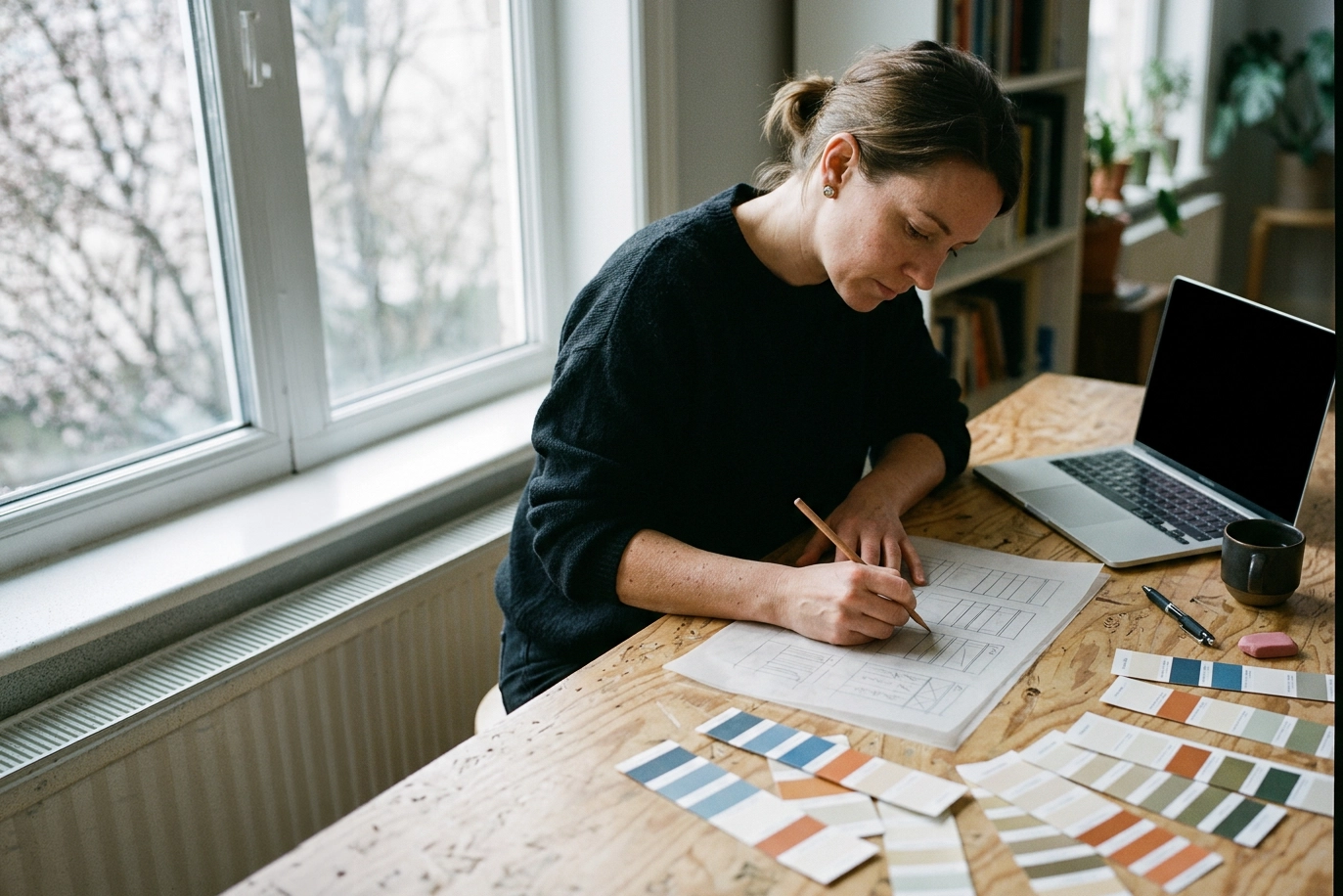
Small groupsPersonal feedbackProfessional Adobe toolsPractical assignmentsPortfolio development
Is this where you are now?
You have creative ideas, but turning them into finished design still feels difficult
You know what you like visually, but cannot always explain why.
Canva or templates only take you so far.
Adobe software still feels intimidating or fragmented.
You want work that looks more considered and professional.
You need structure and feedback instead of learning everything alone.
What changes
Build the confidence to make your own visual choices
Start a design with a clear idea instead of a blank screen.
Choose type, colour and composition with more intention.
Work more independently in Photoshop, Illustrator and InDesign.
Develop a visual identity instead of combining random elements.
Build portfolio work that shows both skill and creative thinking.
What you learn
Build your design skills step by step
The programme combines software with visual thinking.
You learn the tools while working on design problems,
so technique and creative judgement grow together.
Photoshop
Image and visual storytelling
Edit images, work with layers and selections,
combine material and develop stronger visual compositions.
Illustrator
Shape, icons and logos
Learn vector drawing and use shape,
line and form to create graphic elements and identity work.
InDesign
Layout and publications
Work with grids, typography and images
to create clear multi-page designs.
Design principles
Typography, colour and composition
Understand hierarchy, contrast, balance
and the visual decisions behind professional design.
Branding
Build a visual identity
Bring colour, type, imagery and graphic elements
together into a recognisable visual direction.
Final project
Create portfolio work
Bring your skills together in a personal project,
refine it with feedback and prepare it for presentation.
Student experiences
Learning becomes easier when you can ask questions and receive useful feedback
Students come from different professional backgrounds.
What they have in common is the wish to understand design
and become more confident in their own work.
βI took this alongside my job in communications.
I wanted to design things myself instead of always outsourcing.
This course gave me insight and confidence.β
Tjerk
Who this course is for
A practical starting point if you want to grow into design
You may be changing careers, working in communication,
building your own business or simply ready
to take your creative interest more seriously.
You do not need a design background to begin.
Career switchers
who want structure, guidance and portfolio work
Marketing and communication professionals
who want to create stronger visual work themselves
Freelancers and business owners
who want more control over their visual identity
Creative beginners
who want to move beyond templates and learn professional tools
After the course
Create work you can use outside the classroom
The aim is not simply to know more software.
You learn how to take a brief, develop an idea,
make visual choices and bring the work
to a presentable result.
Social content
Create visual content for digital channels
with stronger hierarchy and consistency.
Publications
Design brochures and multi-page layouts
using grids, typography and image.
Visual identities
Develop a recognisable direction
using colour, type and graphic elements.
Portfolio pieces
Present finished projects
that show both your skills and design thinking.
Your portfolio
Finish with work you can keep developing
Your assignments help you develop
your first professional portfolio pieces.
You receive feedback on the work
and practical advice on how to present it clearly.
Develop work from a brief
Improve projects through feedback
Select your strongest work
Learn how to present a project professionally
Professional direction
Use design skills in a way that fits your ambitions
The course can support a move into design,
strengthen the visual side of your current role
or help you create more independently
as a freelancer or entrepreneur.
Graphic design
Content creation
Marketing and communication
Freelance and entrepreneurial work
Further creative education
Optional diploma exam
Want formal assessment as well as portfolio work?
β¬255
Optional and not included in the tuition fee
The optional exam combines practical design work
with a written component.
After passing, you receive an Art and the City diploma.
Two larger final design assignments
A short theory assessment
Evaluation by a senior instructor
Diploma after successful completion
Without the exam
Focus on learning and portfolio development
The diploma exam is optional.
If you prefer not to take it,
you can still complete the course,
develop your portfolio and receive
a certificate of participation.
This gives you the freedom to choose
whether formal assessment matters for your next step.
Good to know
Questions before you decide
Do I need previous design experience?
No. The course is designed for beginners.
You start with the foundations and build your skills
through practical assignments and feedback.
Which software will I use?
You work with Adobe Photoshop,
Illustrator and InDesign.
You need access to Adobe Creative Cloud
and a computer that can run the software comfortably.
Is this mainly a software course?
No. Software is part of the course,
but the focus is broader.
You also learn typography, colour,
composition, visual storytelling,
branding and layout.
Will I build a portfolio?
Yes. You develop design work throughout the programme
and receive feedback on how to strengthen
and present your projects.
Do I have to take the exam?
No. The official exam is optional and costs β¬255.
If you pass it, you receive a diploma.
Without the exam, you receive a certificate of participation.
Can I combine the course with a job?
The programme is taught live online,
which makes it easier to combine with work.
You should also allow time for assignments
and portfolio development outside the live lessons.
Can I pay in instalments?
Yes. The tuition can be paid in five instalments of β¬594.
Graphic Design for Beginners
Give your creative ideas the skills to match
Learn professional design tools,
understand the principles behind strong visual work
and build projects you can confidently show.
Want to develop your creative skills in another direction?
Graphic Design gives you a broad visual foundation.
These programmes let you move further into
creative AI, digital design or online marketing.
Visual design & AI
Visual Design + AI
Combine visual design with creative AI.
Develop stronger concepts, learn to judge AI output
and use Adobe and generative tools
as part of one professional creative process.